


Mining at Rivers Edge
Most people think of rivers as moving water. But rivers also have another important job: they move sediment from the hills to the ocean during storms.
As rain falls on hillsides and ridgelines, it gradually erodes soil and carries both water and sediment downhill into our creeks and wetlands. This sediment—clay, silt, sand, gravel, cobbles, and even boulders—helps shape stream channels, floodplains, and wetlands over time. The study of these natural processes is called fluvial geomorphology.
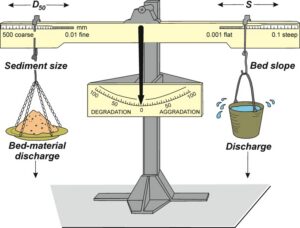
A key principle of this geomorphology is that rivers are constantly seeking a kind of dynamic equilibrium. In other words, rivers are always trying to balance the amount of water flowing through them with the amount of sediment they carry. A river’s ability to move sediment depends largely on its slope and speed: the steeper and faster the flow, the larger the material it can transport. During major flood events, rivers can even move boulders the size of cars!
However, when a river carries more sediment than it can effectively transport, it deposits some of those larger sediment materials (e.g., gravel) along the way. In contrast, when a river carries too little sediment, it makes up the difference by eroding its own bed and banks. It is in this way that a river is continually trying to restore its own natural balance.
Historically, the Russian River carried abundant sediment from the region’s erosive hills into its tributaries and mainstem. Over geologic time, this resulted in large quantities of sediment deposits in our broader, flatter valley reaches where river flows slowed down.
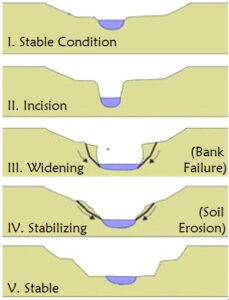
But when rivers are deprived of sediment by dams or gravel mining, that balance is disrupted. The river still has the energy to move sediment during high flows, but not enough supply. To compensate, it cuts downward into the riverbed and erodes its banks. This process, called incision or downcutting, is the river’s way of trying to regain equilibrium.
Over the last 150 years, the Russian River has been heavily altered. Two large dams and hundreds of smaller ones have reduced the natural downstream supply of sediment, while gravel mining contributed to the further diminishment of available sediment by physically removing material from the river. Together, these impacts created a major sediment deficit. As a result, parts of the Russian River have been downcut by an estimated 25 to 30 feet below the historic floodplain. Simultaneously, riparian wetlands were filled and sections of the river were channelized to make room for agriculture and housing development. Like water forced through a narrowed hose, though, these changes actually caused water to flow faster and erosion to intensify—a self-inducing problem.
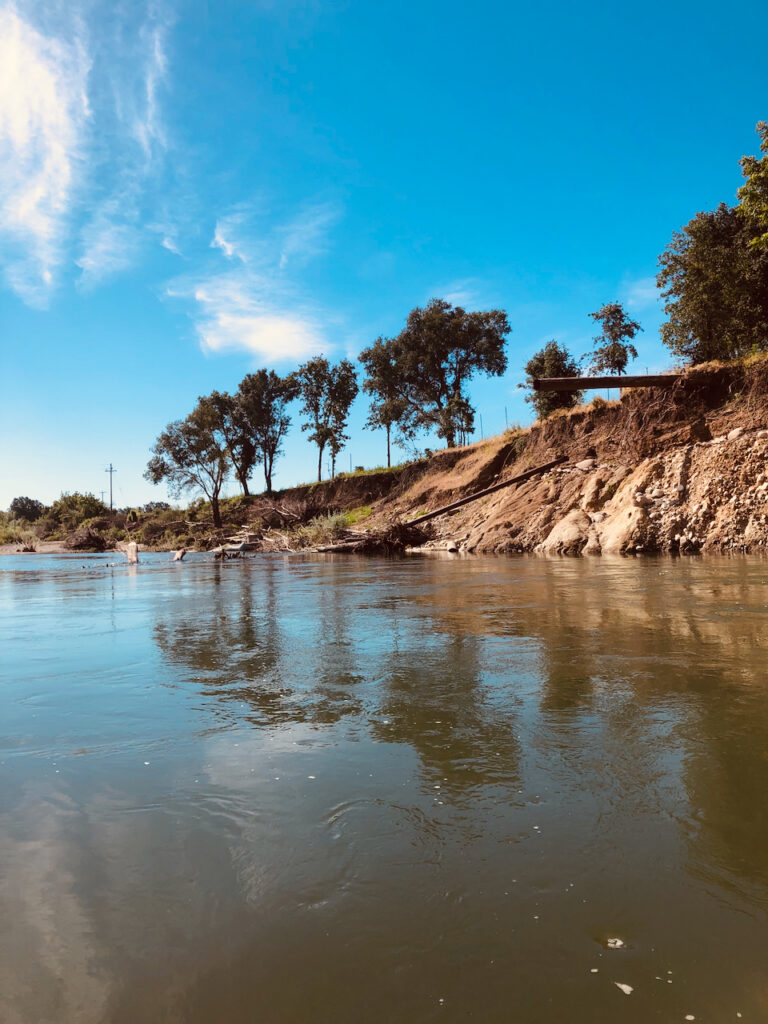
These historical disruptions have left us with a deeply incised, unstable river channel with steep, eroding banks and vertically disconnected floodplains. All of which have reduced the river’s ecological health and its natural resilience.
Why does this matter?
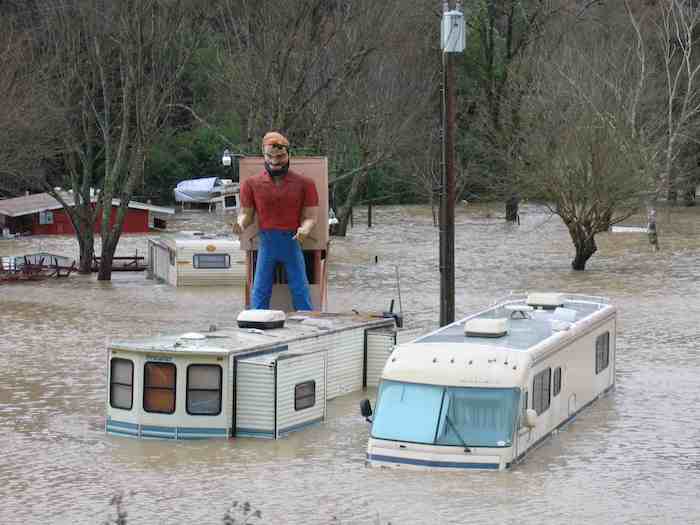
The culmination of all these impacts is significant and continues to impact the health of the river today. As the riverbed incised, groundwater levels dropped along with it. Channelization and incision have also dramatically reduced the river’s footprint, increasing vulnerability to climate-driven flooding. At the same time, the loss of floodplain wetlands has diminished critical habitat and food sources for young salmon and steelhead.
As communities today continue to deal with the consequences of our past decisions, some have suggested that we return to gravel mining to help reduce bank erosion. But this overlooks the history and root cause of the issue that got us here today: bank erosion is largely a response to the sediment deficit created by past mining and dams. As such, presenting mining as the solution to damage caused by mining does not make sense.
That said, solutions do exist—solutions that can help restore the river’s natural resilience without making today’s erosion problems worse.
Next month, we’ll look at practical ways to help the Russian River get back to equilibrium and begin reversing the impacts caused by gravel mining and channelization.