


Healing the River, Healing Ourselves
New Research from Dominican University and Russian Riverkeeper Suggests Cleanup Volunteering Improves Psychological Well-Being
What if spending a few hours helping clean the Russian River could also improve your mood, deepen your sense of connection, and support your mental well-being?
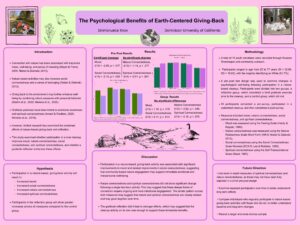
New research conducted by Dominican University psychology student and Russian Riverkeeper volunteer Emmanuelle Knox, under the guidance of Dr. Veronica Fruiht in Dominican’s Psychology Department, suggests the answer may be yes.
Knox’s research explored the psychological effects of participating in Russian Riverkeeper cleanup events, examining how environmental volunteer work impacts mood, social connection, and feelings of connectedness to nature and spirituality. Her findings add to a growing body of research showing that spending time outdoors and engaging in meaningful community action can positively affect mental health.
But what makes this study especially powerful is that it focused specifically on our watershed community and the volunteers who show up to protect it.
Studying the Power of Giving Back
The study examined participants before and after they joined Russian Riverkeeper cleanup events. Volunteers completed surveys measuring mood, social connectedness, nature connectedness, and spiritual connectedness.
Participants ranged in age from 25 to 77 years old and represented a wide cross-section of community members coming together around a shared purpose: caring for the Russian River watershed.
The results were striking.
After participating in cleanup events, volunteers reported a significant improvement in mood and a modest increase in social connectedness — suggesting that environmental volunteer work may help people feel happier, more emotionally uplifted, and more connected to others in their community.
As Knox summarized:
“Overall, the findings support the idea that environmental volunteer work can positively impact psychological well-being, particularly by enhancing mood and fostering a stronger sense of community connection.”
The study also explored whether a short gratitude reflection exercise before the cleanup enhanced these benefits. While the reflection activity itself did not significantly change outcomes, the cleanup experience alone appeared to provide meaningful psychological benefits.
Why This Matters
Many people today are searching for ways to cope with stress, isolation, burnout, and eco-anxiety. At the same time, communities across the country are looking for meaningful ways to reconnect with each other and the natural world.
This research suggests that environmental stewardship may offer both.
Other studies in psychology and environmental health have found that spending time in nature can reduce stress, improve emotional well-being, and strengthen feelings of meaning and belonging. Knox’s work builds on that research by showing that active participation — not just being in nature, but caring for it — may provide additional emotional benefits.
There’s something uniquely powerful about working side-by-side with others toward a visible, positive goal. Volunteers often leave cleanups tired but energized, grounded, and proud of the difference they made.
At Russian Riverkeeper, we hear this all the time:
people come to help the river, but they leave feeling helped themselves.
A Community Effort with Real Impact
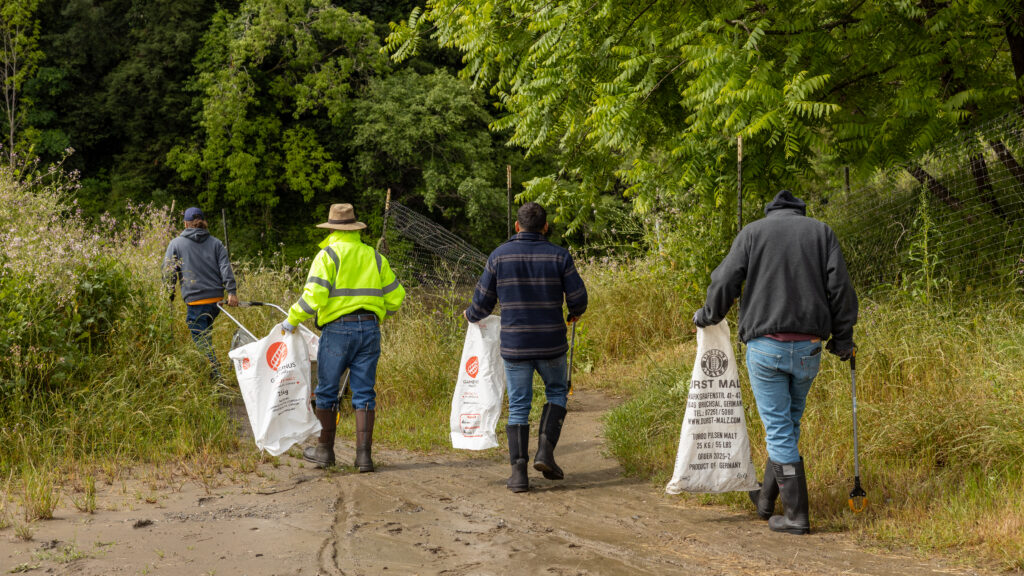
Each year, approximately 900 volunteers participate in Russian Riverkeeper cleanup efforts throughout the watershed. Together, volunteers remove trash from creeks, riverbanks, neighborhoods, and public spaces, helping protect wildlife, improve water quality, and keep our communities beautiful.
But beyond the bags of trash collected, these events also create something harder to measure and just as important:
community.
Neighbors meet neighbors. Families work together outdoors. Students, retirees, and first-time volunteers discover shared purpose and connection. In a world where many people feel increasingly disconnected, these moments matter.
Knox’s research helps put scientific language to something many volunteers already intuitively feel:
taking care of the Earth can also help take care of us.
Join Us at a Cleanup
Whether you’re looking to make a difference, spend more time outdoors, meet like-minded people, or simply take a break from screens and stress, volunteering with Russian Riverkeeper is a meaningful way to get involved.
You do not need experience — just a willingness to show up.
Together, we can protect the Russian River watershed while building a healthier, more connected community.
Ready to volunteer?
Sign up for an upcoming cleanup at:
www.russianriverkeeper.org/volunteer