

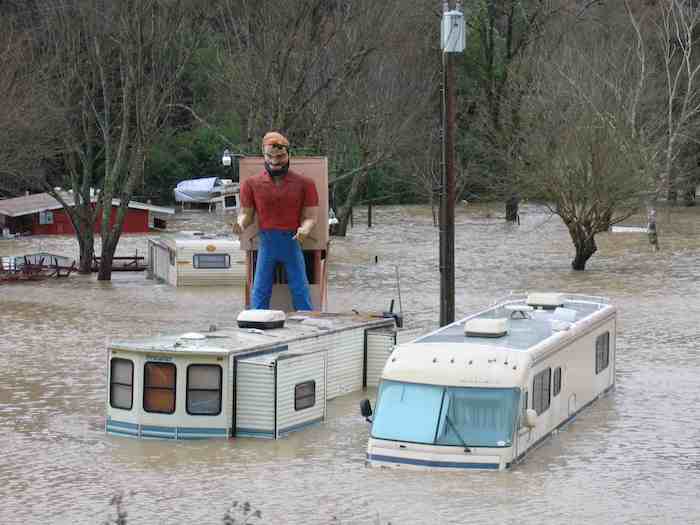

Super El Niño is a term that is all over the news this summer and early fall. What does this mean for the Russian River? Does it mean we’ll have floods on the Russian River? Maybe, but not always. Despite the uncertainty, the odds are greater that we’ll have heavy rains, so it’s good to prepare for the worst.
First, El Niño is a climate pattern where the usual easterly trade winds weaken, allowing warm ocean water to slosh eastward across the tropical Pacific Ocean toward the Americas. This pattern alters global weather usually bringing more rains to parts of the Americas and drought to Australia and Indonesia.
What we do know is that there are greater odds of heavy rains this year in California but where that rain falls is impossible to predict. Some past Super El Niños, like 1991-1992 the Russian River had much lower than average rainfall, some of our biggest floods in 1955 and 2019 were not El Niño years. The last historic super El Niño in 2015-2016 one of the strongest on record produced only average rain amounts so El Niño doesn’t guarantee floods.
Heavy rains can hit the Russian River any year, so it’s always good to prepare for winter rains every year. It’s especially important to prepare this year in case this strong El Niño points heavy rain towards our watershed as the odds are higher than normal this year.
Every year prior to the rain season it is important to:
Get your car ready for winter
- Check the windshield wipers on your car and replace as needed
- Fill the windshield wiper fluid reservoir and check headlights
- Check your tire treads to be sure they are not worn down; replace as needed.
- Keep your gas tank full or car fully charged when storms are predicted
- Have a simple emergency kit with a flashlight, a bottle of water, a warm blanket or jacket, phone charger or power bank
Get your house ready for winter rains
- Clear rain gutters and downspouts of fall leaves (be careful!)
- If you have a leaky or older roof, consider getting it inspected and repaired
- Check drainage areas around your home and clear if blocked or full of leaves
- Put away summer items and outdoor furniture or secure for winds
- Check for dead or loose tree limbs near your house or over driveway or walkways
- Turn off irrigation systems once rain starts in winter
- If you live in an area that might flood, fill and stage some sandbags usually available through your city or county
- If you are new to an area, check County flood maps and talk to your neighbors about past heavy rain events so you are prepared.
Sonoma County flood maps: https://experience.arcgis.com/experience/6a336939ddad424f8b097ddffb580b90/
Mendocino County flood maps- Click on FEMA Flood Insurance Maps:
https://www.mendocinocounty.gov/departments/planning-building-services/maps
Lastly, have a family meeting area designated, especially if you have children, in case adverse weather hits, and a plan to get in touch with your family members. If you live near an elderly person, especially if they live alone, consider checking on them if we experience adverse weather to be a good neighbor!
More than anything, when floods are occurring, do not attempt to drive on flooded roads; more drownings occur from people driving. Turn Around, Don’t Drown!