


This fall, an unusual ocean phenomenon is making its way along California’s coast, temporarily raising ocean water levels by several inches. Known as Kelvin waves, these large-scale ocean waves offer an interesting look at how changing ocean conditions can affect our coastline and potentially influence flooding along rivers like the Russian River.
While Kelvin waves are a natural ocean phenomenon, the conditions they create provide a useful example of some of the challenges coastal communities will face as sea levels continue to rise with climate change.
What Are Kelvin Waves?
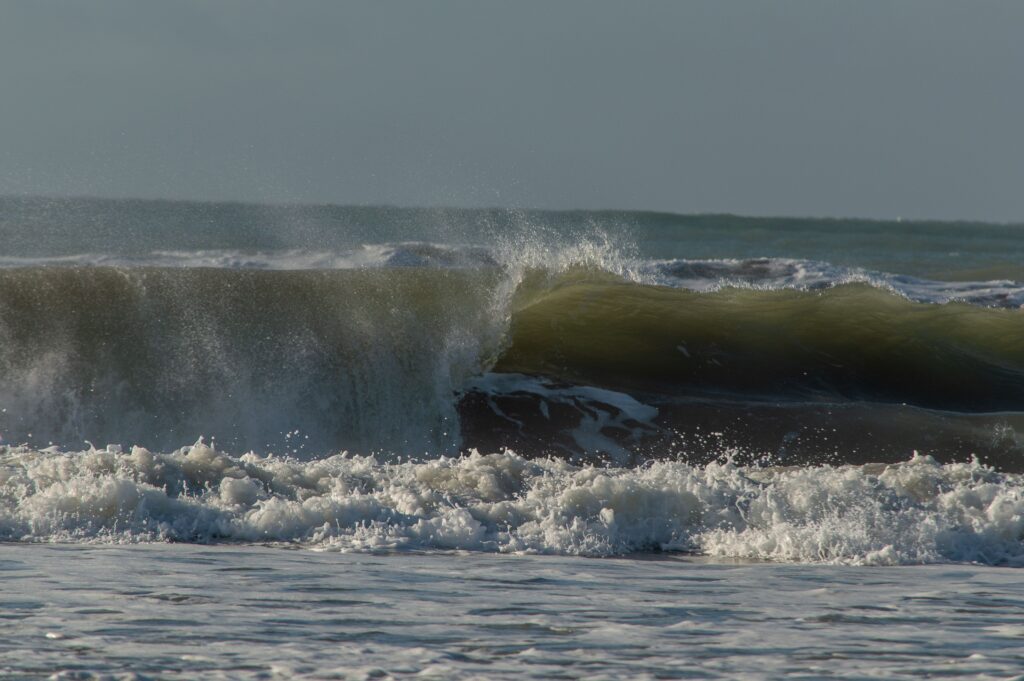
Unlike the wind-driven waves we typically see breaking along the coast, Kelvin waves are large-scale movements of ocean water that can travel thousands of miles. Guided by Earth’s rotation and the coastline, coastal Kelvin waves can temporarily raise sea levels as they move along the shore.
These changes can be small but consequential, with Kelvin waves being capable of temporarily raising coastal water levels by 6–12 inches (NOAA). During El Niño, successive Kelvin waves can travel along the coast over several months, raising water levels in different places as each pulse passes, with levels easing between pulses (NOAA Fisheries). Warmer-than-normal seawater occupies more space, helping raise the baseline beneath each tide. Average tide levels are expected to be higher this winter, with this year’s king tides also expected to exceed their usual heights (LA Times, October 15, 2026). Together, these conditions can bring water farther inland. A large atmospheric river arriving simultaneously can then compound flooding through heavy rainfall and increased river flows.
What Could This Mean for the Russian River?
Under normal conditions, the Russian River flows toward the ocean, with the difference in water levels helping move freshwater downstream. Day to day, this flow out toward the Pacific is influenced by tides, waves, sandbar formation, and the amount of water coming downstream, which together shape water levels in the estuary.
When ocean levels are unusually high, however, that relationship can change. Higher seawater levels can reduce the difference between river and ocean elevations, slowing drainage and causing water to back up farther into the lower river and even potentially several miles upstream. This is known as a backwater effect. If elevated ocean levels and winter high tides coincide with heavy precipitation, they can expand backwater effects near the Russian River mouth, making water levels rise sooner and farther upstream and recede more slowly, depending on local conditions.
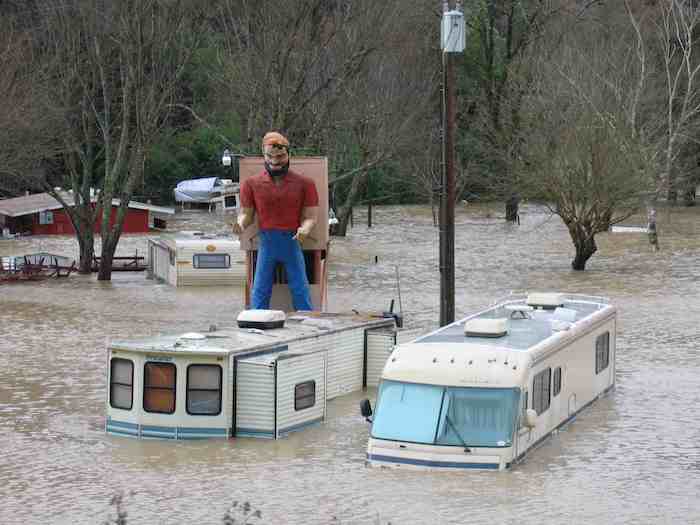
Kelvin waves alone may not cause flooding, but they can amplify the effects of other natural phenomena. Specific impacts depend on a mix of factors. They include river flow, tides, storm conditions, and mouth status (open or closed). Timing of these factors overlapping also matters. Guerneville and Monte Rio experienced heavy flooding in 2019, when rain from atmospheric rivers fell on already saturated soils. That history underscores the existing rainfall-driven flood risk, which ocean conditions this winter may amplify near the coast.
Heavy rain is only one piece of the flood picture near the river mouth. A 2018 USGS study included the Russian River. It found coastal water levels tended to be higher when rivers were running exceptionally high. This is because storms and breaking waves helped raise ocean levels at the same time that rivers needed to drain. A closed sandbar can further restrict drainage, holding water in the estuary and raising its level.
A Preview of Future Conditions
This winter’s elevated seas offer a real-time glimpse. They show the pressures climate change is bringing to the Russian River and local coastline. Without cuts to human-caused greenhouse gas emissions, warming will worsen these risks over time.
Kelvin waves briefly raise sea levels. Climate-driven sea-level rise adds a lasting baseline increase beneath tides and storms. Climate change will also intensify extreme rainfall. This will send more water downstream just as higher ocean levels make drainage harder. Together, these changes can make today’s unusual flood conditions more common along the coast and lower river.
None of this means that every storm this winter will equate to extreme flooding. It does not imply uniform impacts throughout the watershed. Rather, it highlights the importance of understanding how our rivers and oceans interact.
Local leaders should act now. Protect and restore floodplains and coastal wetlands. Keep new development out of flood-prone areas and plan infrastructure for rising seas and heavier storms. Our communities need preparation before the next flood, not just repairs afterward.