
Restore
Restore the 300+ acres of floodplain and critical salmon habitat



Climate Action
Russian Riverkeeper advocates for transparent policies and lasting solutions to clean water.

Climate Adaptation
Russian Riverkeeper is focused on preparing our community and river for changes in our climate.

Trash Cleanup
Russian Riverkeeper fights to protect the water, wildlife, and way of life we all cherish.

Our Vision
For over 100 years, the Russian River has been severely impacted by gravel mining, as well as urban and agricultural development. Russian Riverkeeper has been working diligently for more than 25 years to change this degradation of the river. The Middle Reach from Healdsburg to Forestville has lost 80% of its flood plain over the past 100 years.
Today, one of Riverkeepers’ top priorities is the restoration of what’s called the Hanson Site. Located west of Windsor in the middle reach of the Russian River, it contains 357 acres and four abandoned gravel pits that present an opportunity to increase our resilience to climate change.
Our goal is to restore the Hanson site back to functional floodplains that are connected to the river channel to regenerate the benefits to the community and river ecosystem that healthy rivers provide.
Restore
Restore the 300+ acres of floodplain and critical salmon habitat

Increase Storage
Increase temporary flood storage to reduce downstream flooding

Recharge
Increase groundwater recharge by slowing and spreading water

Improve Water Quality
Improve water quality by eliminating methyl mercury production
Enhance Habitat
Enhance river habitat by reducing high channel velocities
Reduce Erosion
Reduce bank erosion by slowing the river currents

Create
Create the largest park along the Russian River
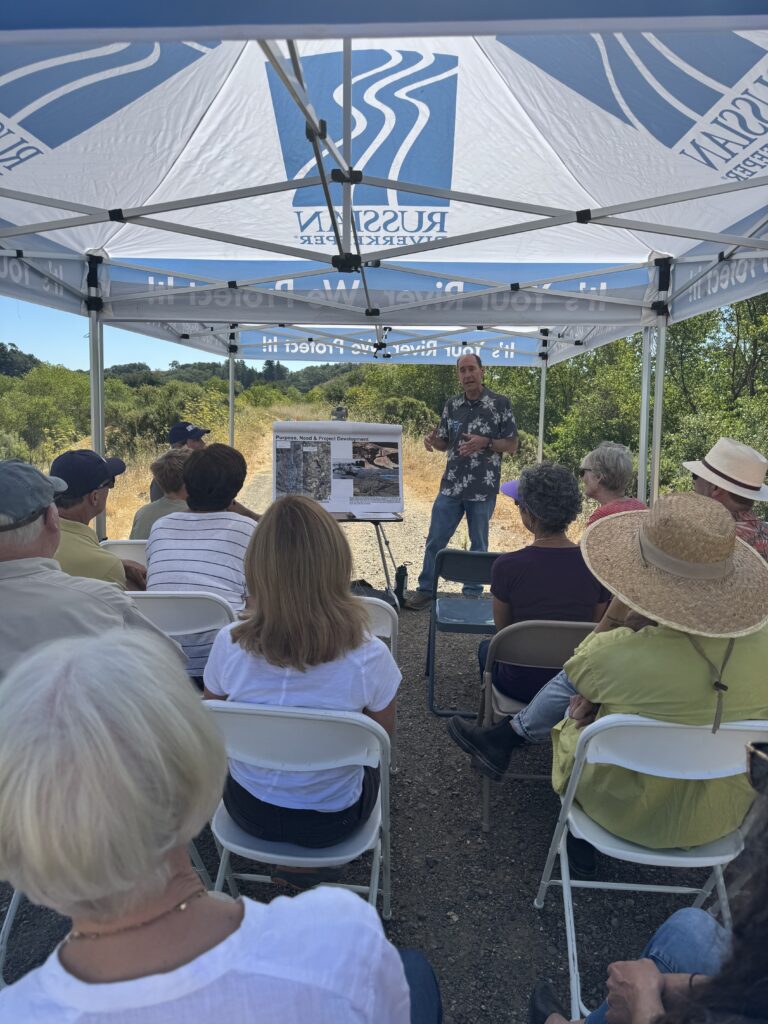
Russian Riverkeeper is part of a project team with Endangered Habitats Conservancy, Martin Marietta, State Coastal Conservancy, Permit Sonoma, CA Department of Fish and Wildlife, Sonoma County Regional Parks, and NOAA Fisheries. Riverkeeper staff are helping to create restoration and public facility designs, facilitating engineering consultant work on-site, removing invasive plants prior to construction, and leading public tours of the project site. Riverkeeper is also working with adjacent property owners to facilitate project construction on several adjacent parcels and is negotiating to acquire several properties needed for the project.
Riverkeeper is leading the effort to fund the final design and permitting phase of the project. We will lead the final design phase with the project team, which will open the door to project construction.
Although the work that remains to be completed is substantial, taking several years to complete, we believe the results will be transformative.
Floodplain Restoration
Engineers are designing a plan to carefully reshape the terrain, filling the existing gravel pits and restoring lowered floodplains that will reconnect with the river. These floodplains will rehabilitate the ecological systems and habitats that are essential for the recovery of fish and wildlife. They will also stop riverbed degradation, eliminate methyl mercury pollution, and reduce the population of predatory non-native fish populations.
Another vital benefit of this renewal is providing space for the river to expand and slow its pace during heavy rainstorms, which will help to avoid flooding in downstream communities such as Sebastopol and Guerneville and increase groundwater recharge.
At completion, the Hanson site will be the largest park on the Russian River, providing river access and recreational opportunities for everyone, that is compatible with restoration.
As you might guess, this is no small task. Roughly 4.5 million cubic yards of terrain will be moved before site work is completed. This is one of the largest earth-moving projects in Sonoma County’s history, except for Warm Springs Dam, built to create Lake Sonoma. This pioneering rehabilitation project will serve as a model for future restoration efforts on the Russian River and on rivers throughout California and the world.

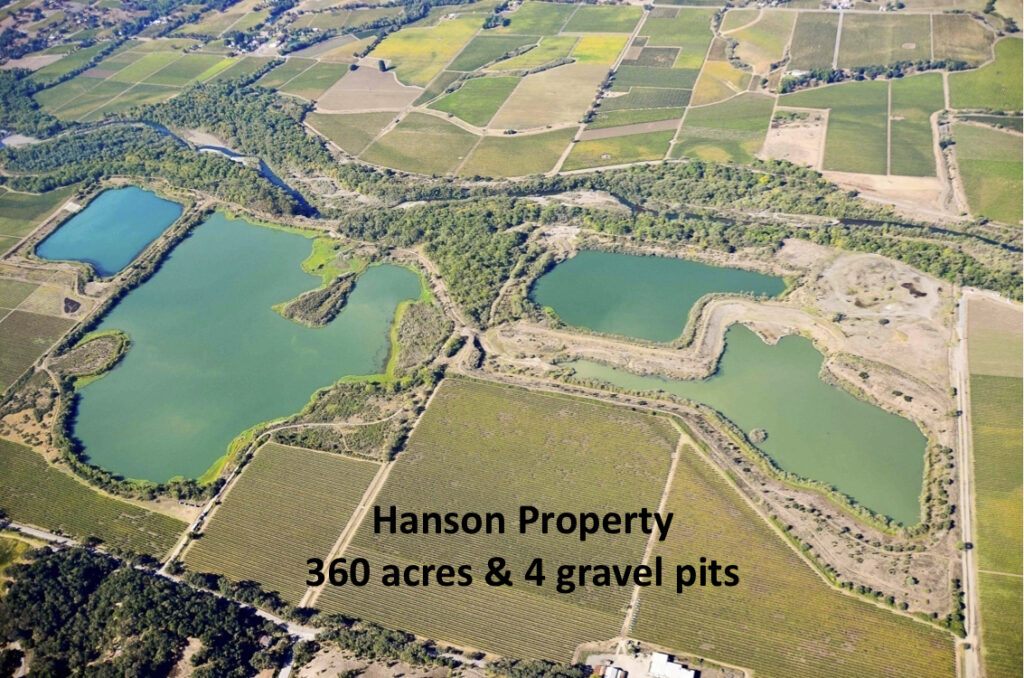
Update: Floodplain Restoration Reaches Key Milestone
It’s been a busy time for the Russian River (Hanson) Floodplain Restoration Project since Supervisors approved the Project Use Permit […]
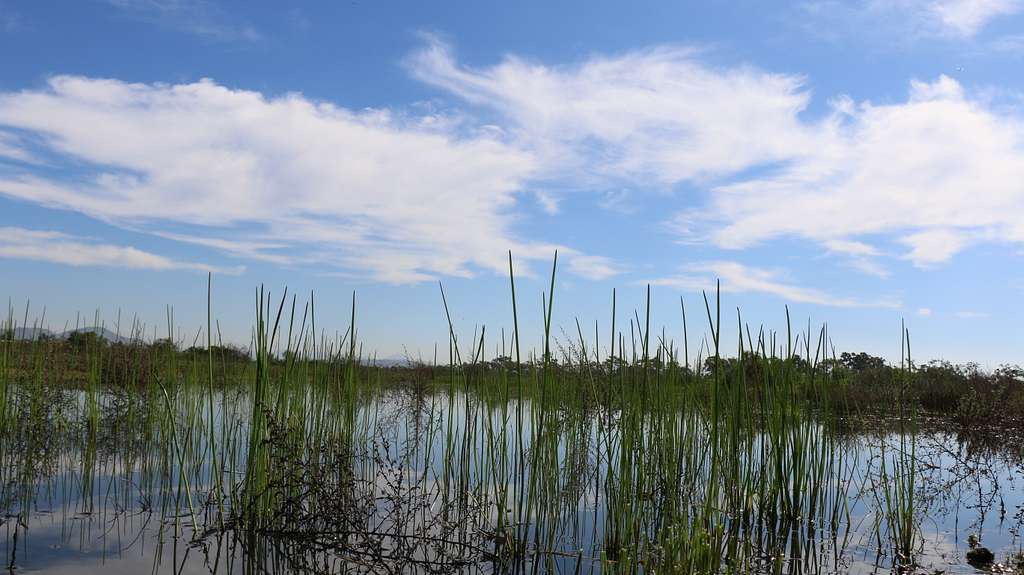
Hanson Floodplain Restoration Milestone!
2024 Update! Hanson Floodplain Restoration Project News The Hanson Russian River Floodplain Restoration Project near Windsor received a big boost […]
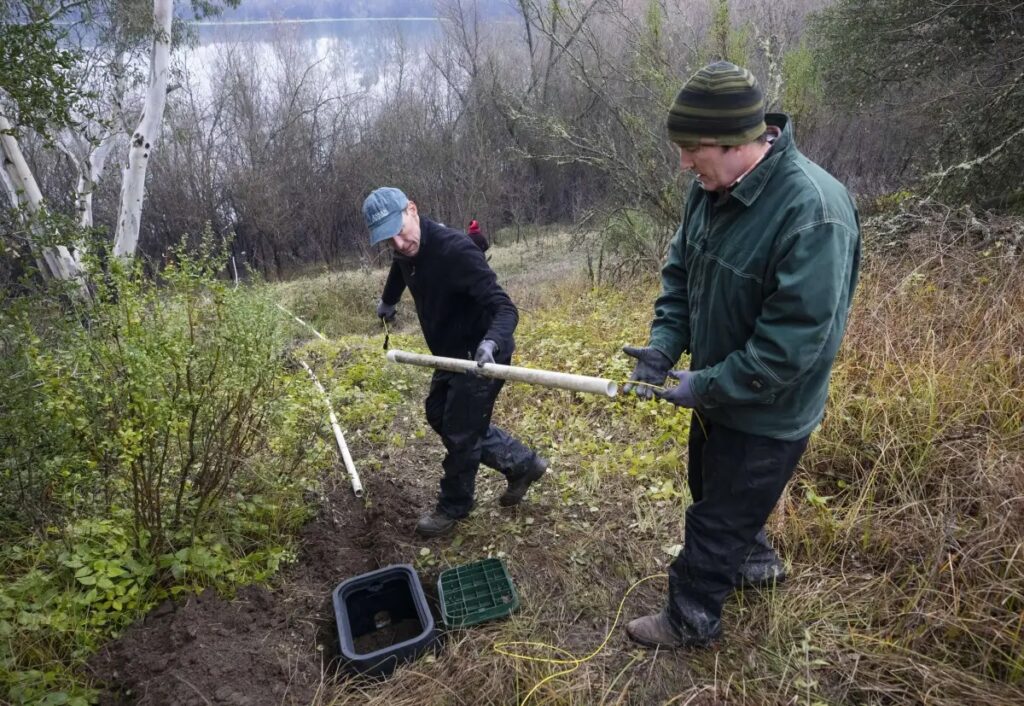
Hanson Restoration Update
This month, we worked with Clear Heart Drilling and Luhdorff Scalmanini Consulting Engineers to install new groundwater monitoring wells so […]
Subscribe to our monthly newsletter for updates on events, local environmental news, volunteer opportunities, and how you can support the health of the Russian River.