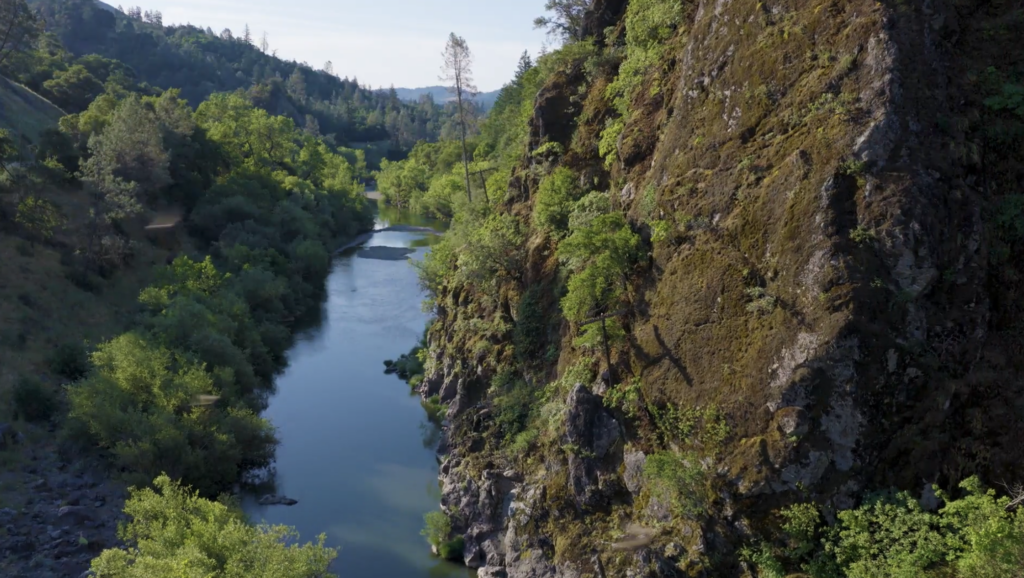


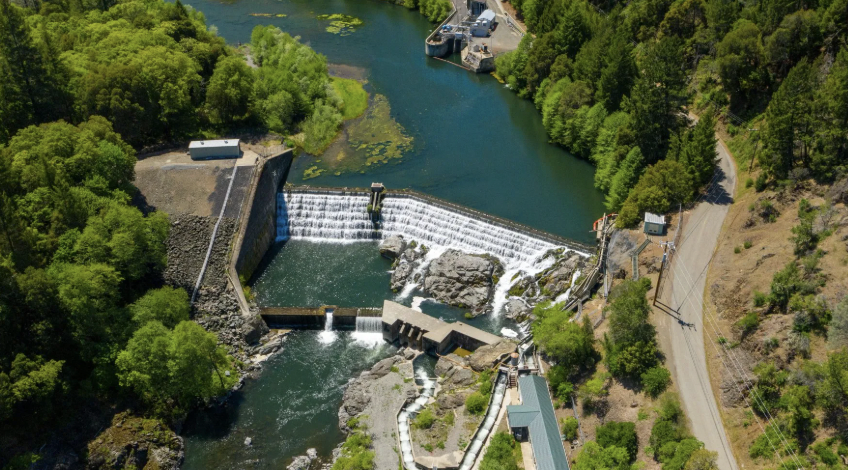

What is the Potter Valley Project?
The Potter Valley Project was built in the early 1900s to divert water from the Eel River into the Russian River while generating hydroelectric power. Over time, aging infrastructure, equipment failures, and seismic risks made the project increasingly costly to maintain, leading PG&E to pursue decommissioning. Combined with climate-driven reductions to diversions, the project is no longer economically viable.
The Two-Basin Solution.
In response to PG&E’s private, business decision to decommission the Potter Valley Project, stakeholders from both the Eel and Russian River watersheds developed the “Two Basin Solution,” a collaborative effort balancing ecological restoration with water supply needs. The effort seeks to restore fish passage in the Eel River while maintaining reliable water supplies for Russian River communities. After studies found that keeping the dams or retrofitting them for fish passage was not economically or technically feasible, stakeholders shifted to dam removal and a modern wet-season diversion system that allows fish to move freely.
Known as the New Eel-Russian Facility (NERF), the proposed diversion facility would support fish recovery while adapting to changing hydrologic conditions. The project is expected to create engineering and construction jobs while restoring salmon and steelhead populations, benefiting ecosystems and local economies. NERF is intended to provide a more resilient diversion system that moves water when it is readily available and is less dependent on summer flows.
Why is a Southern California water agency in Lake Elsinore involved?
Recent reports indicate that Southern California’s Elsinore Valley Municipal Water District (EVMWD) is exploring the possibility of purchasing portions of the Potter Valley Project. Although no formal proposal has been submitted, EVMWD’s interest has created uncertainty around years of collaborative planning for the NERF.
Beyond the potential to delay the current decommissioning timeline, the prospect of an outside agency acquiring critical water infrastructure raises broader questions about local control. Stakeholders worry that ownership by an outside entity could create incentives that may not align with the long-term needs of local communities, agriculture, fisheries, and ecosystems that depend on a healthy watershed. While EVMWD has characterized its interest as exploratory, it has released few public details about its intentions or long-term objectives.
For that reason, Russian Riverkeeper and partner organizations filed a Public Records Act request seeking greater transparency about communications and discussions surrounding EVMWD’s interest. Our concern is not with any single agency, but with ensuring decisions remain locally driven, publicly accountable, and focused on ecological restoration and reliable supply, rather than the monetization of a shared public resource.
Looking to the Future.
The Potter Valley Project’s decommissioning marks a significant transition for both the Eel and Russian River watersheds. As planning for dam removal and NERF advances, investments in water storage, groundwater recharge, water accounting, efficiency, and modern infrastructure will help prepare communities for an increasingly variable climate.
Investing in watershed resilience today will help secure a sustainable water future for both watersheds.
For more information about the Potter Valley Project, including project history, timelines, and water supply impact, please visit our Potter Valley Project FAQ: