


Understanding Biological Opinions and Their Role in Protecting the Russian River Watershed
The Russian River Watershed, spanning Sonoma and Mendocino counties, is a region of ecological and cultural importance. It supports iconic species like endangered coho salmon and threatened steelhead trout, while also serving as a vital resource for agriculture, cities, and recreation. However, it faces ongoing pressures from urban growth, habitat alteration, and climate variability. One of the primary tools used to balance environmental protection with human use in this region is the biological opinion.
What is a Biological Opinion?
A biological opinion (BiOp) is an official document issued under the Endangered Species Act (ESA) by either the U.S. Fish and Wildlife Service (USFWS) or the National Marine Fisheries Service (NMFS). It assesses whether a proposed federal action—like dam operations or water releases—will jeopardize endangered species or harm their critical habitat.
The process starts when a federal agency submits a biological assessment for a project. NMFS or USFWS reviews the science, consults with project agencies, and issues a BiOp. The BiOp can result in one of two findings:
- No Jeopardy: The proposed action won’t likely jeopardize listed species but may still cause harm and negatively impact some species.
- Jeopardy: The proposed action threatens the species’ survival or habitat.
In either case, the BiOp often includes:
- Reasonable and Prudent Measures (RPMs) – to reduce incidental harm to listed species.
- Reasonable and Prudent Alternatives (RPAs) – alternative approaches to avoid jeopardy.
These elements are legally enforceable and aim to ensure that essential operations, like water supply and flood control, continue while minimizing harm to protected species.
The Russian River Watershed Context
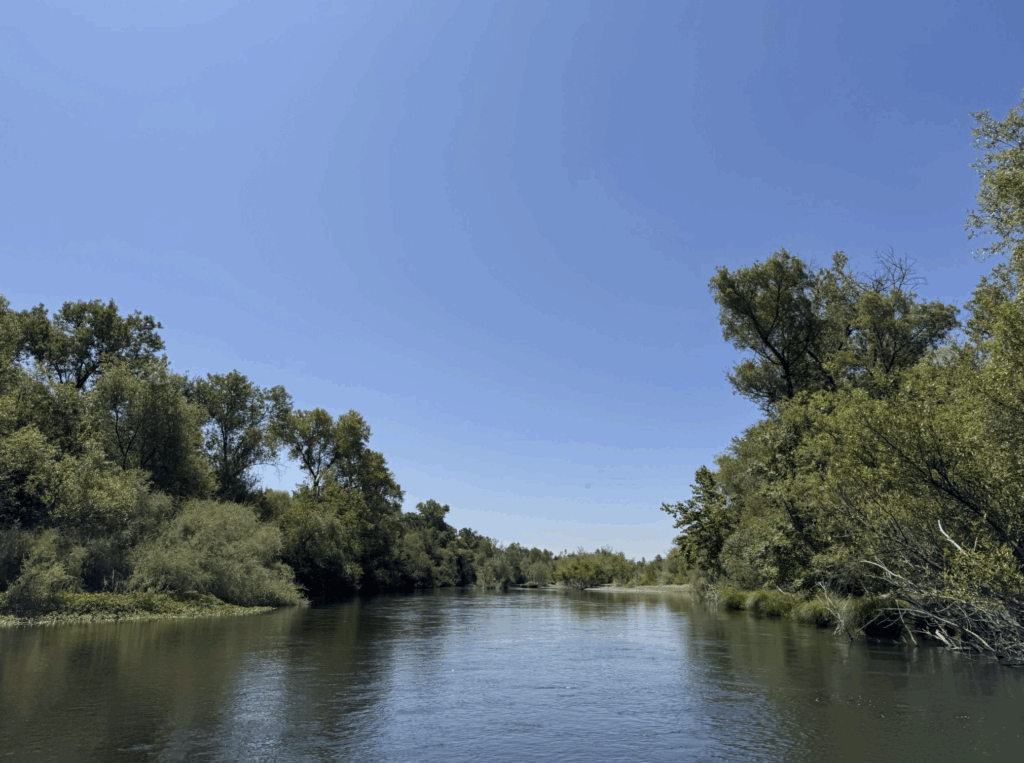
The Russian River Watershed covers roughly 1,500 square miles, with the main river stretching 110 miles from Mendocino County to the Pacific Ocean. Two federally managed reservoirs—Lake Mendocino (via Coyote Valley Dam) and Lake Sonoma (via Warm Springs Dam)—store runoff for municipal water supply, agriculture, fish habitat, and flood control. Water releases are coordinated by Sonoma Water, under federal oversight.
This watershed provides habitat for several federally listed species, including:
- Central California Coast coho salmon – endangered
- California Coastal steelhead – threatened
- Chinook salmon – threatened
In addition, the area supports sensitive amphibians, birds, and plants that depend on specific streamflow patterns and water quality. Decades of dam construction, water diversions, flood control, and urbanization have disrupted natural flow regimes and degraded fish habitat, making conservation action critical.
How Biological Opinions Help
Biological opinions are designed to protect ecosystems while allowing human use. They offer the following benefits:
- Science-Based Decision-Making: BiOps rely on thorough scientific analysis to determine risks to species, keeping decisions grounded in data, not politics.
- Enforceable Protections: The conditions in a BiOp are legally binding, holding agencies and project operators accountable.
- Habitat Restoration: Many BiOps trigger restoration projects and water flow adjustments that help both listed species and the broader ecosystem.
- Adaptive Management: BiOps often include monitoring and flexibility to update actions as new data or climate conditions emerge.
In the Russian River Watershed, the 2008 Biological Opinion brought major changes, such as improved fish habitat, restoration efforts in Dry Creek, expanded scientific monitoring, and multi-agency collaboration. It also led to substantial investments in stream restoration. Still, recovery of species like coho salmon remains incomplete due to challenges in implementation and ongoing stressors.
Limitations of Biological Opinions
While powerful, biological opinions have limitations:
- Limited Jurisdiction: BiOps only apply to federal actions, so private or local activities with ecological impacts may fall outside their scope.
- Lagging Science: BiOps use the best available science at the time of issuance, which may not fully capture emerging threats like invasive species, extreme drought, or evolving climate impacts.
- Dependence on Funding and Coordination: The success of a BiOp hinges on agencies having the resources and political support to carry out its recommendations.
While biological opinions are essential legal and scientific safeguards, they must be supported by broader conservation and climate adaptation strategies to fully protect complex ecosystems like the Russian River Watershed.
Conclusion
Biological opinions are more than bureaucratic requirements—they are vital tools that bring together science, law, and community stewardship to protect endangered species. Their value lies in their focus on the needs of species recovery.
However, a BiOp’s real-world effectiveness depends not just on the quality of the science, but on the political will, public support, and funding available to implement its measures. As the Russian River Watershed faces new challenges—from population growth to climate change—the core principles behind biological opinions—scientific rigor, precaution, and adaptive management—will remain key to ensuring a sustainable future for both people and wildlife.
Stay tuned for Part II, which will explore the new 2025 Russian River Biological Opinion and its anticipated impacts on the region.